A standard unit fits when the priority is a clean, functioning restroom and nobody is going to photograph it. It has a holding tank instead of a flush system, so it costs less than a flushable or trailer restroom and…
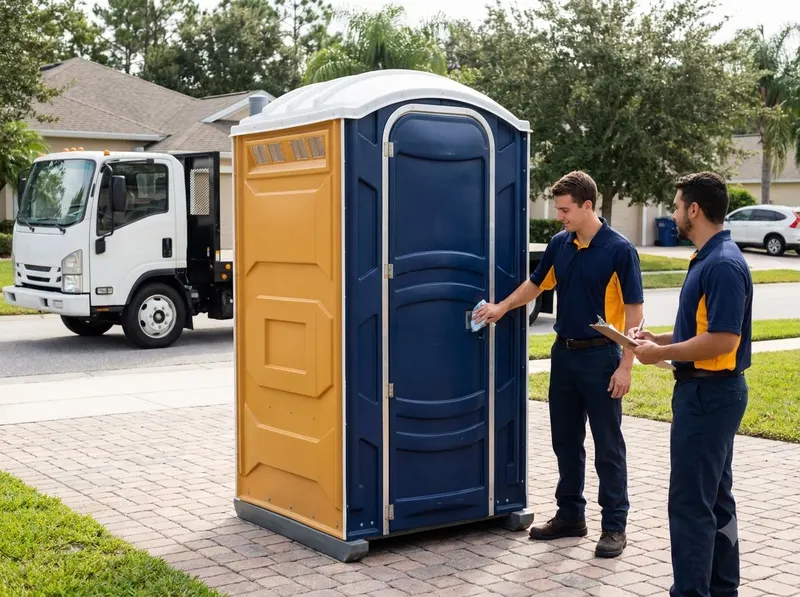
A standard unit fits when the priority is a clean, functioning restroom and nobody is going to photograph it. It has a holding tank instead of a flush system, so it costs less than a flushable or trailer restroom and takes more heat, more use, and rougher ground without complaint. The trade-off is honest: no running water at the bowl, no vanity, no climate control. For a wedding reception in a Baldwin Park backyard or a corporate tent event, most hosts put one flushable or trailer restroom in the guest sightline and add standard units off to the side for volume — that combination costs far less than staging trailers for everyone. For a slab pour in Lake Nona or a re-roof crew in Rosemont, standard is the only unit that makes sense.
Count is where people overpay or run out. The working event rule is one standard unit per 50 guests for a four-hour event, with an added unit for every extra two hours or when alcohol is served — a 150-guest, six-hour party lands at four units, not two. Construction is regulated rather than estimated: OSHA 1926.51 requires one toilet facility on a site with 20 or fewer workers, and additional facilities as crew size climbs, so a 30-man crew needs at least two and usually a third to keep trade partners from stacking up before lunch. Tell us the head count and the hours and we will tell you the number before you pay for it.
Placement is the part that gets discovered on delivery day if nobody asks. Our pump truck needs to park within roughly 25 feet of the unit with clear overhead room, which matters more in Orlando than people expect. College Park and Thornton Park have narrow brick and oak-canopied streets where a low limb decides which side of the driveway the unit goes on. Baldwin Park and much of Dr. Phillips run through gated or HOA-managed streets — send us the gate code and the alley or side-yard spot the association will tolerate, and we will keep the unit out of the front elevation. Conway and Audubon Park yards often slope toward the lakes with soft ground and septic drainfields, so we set standard units on firm, level ground away from drainfields and irrigation heads. Around Parramore, event days near Camping World Stadium and Kia Center bring street closures, so early morning drops beat the barricades. Hourglass District and Rosemont driveways are frequently short — a curbside placement with a cone is usually the cleaner answer.
Florida heat is the other honest variable. Summer temperatures accelerate odor in any holding tank, so weekly service is standard and twice-weekly is the right call for high-traffic units in July and August, on festival grounds, or on a site with 20-plus workers. Each visit pumps the tank, rinses the interior, recharges deodorizer, and restocks paper. Rentals for public property — a sidewalk, a right-of-way, or a City of Orlando or Orange County park such as Lake Eola Park, Harry P. Leu Gardens, or Bill Frederick Park at Turkey Lake — usually need approval from the venue or agency before we place anything, and the permit or venue rule normally dictates the exact spot. Send us that note and we will place to it. Right count, on time, spotless — call (689) 353-8891 and we will size the order over the phone.
Every job gets a firm, written price after a free on-site visit.
Tell us about your standard portable toilet rental job in Orlando and we'll send a clear, written quote — usually the same day.
 SupremePortable Porta Potty Hub