Choose a flushable event unit when guests are the users. The flush bowl holds clear water instead of showing tank contents, the seat is enclosed, and the built-in sink means nobody walks back to your kitchen to wash…
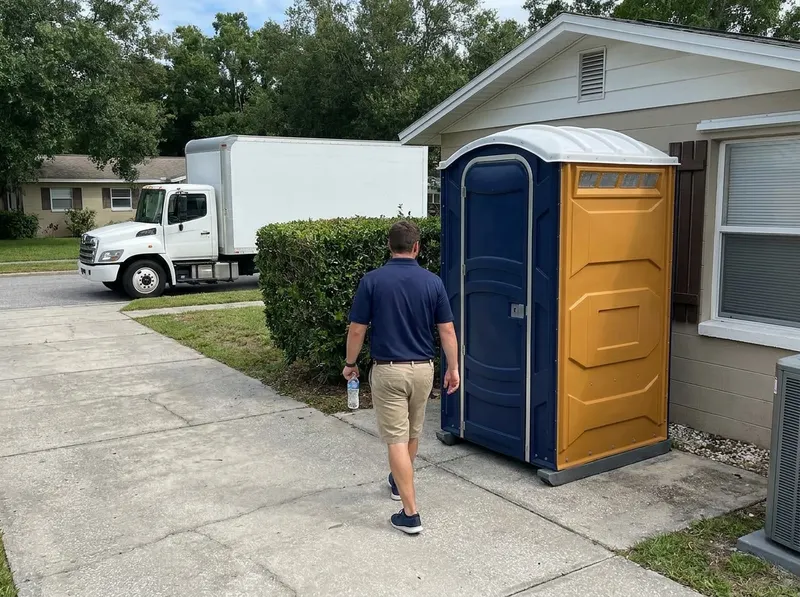
Choose a flushable event unit when guests are the users. The flush bowl holds clear water instead of showing tank contents, the seat is enclosed, and the built-in sink means nobody walks back to your kitchen to wash their hands. That matters at a Harry P. Leu Gardens reception, a Baldwin Park backyard rehearsal dinner, or a first birthday in College Park where the alternative is fifty people cycling through one bathroom. A standard construction unit is a fine tool and costs less, but it has no flush and no sink — on a Central Florida afternoon in the high 80s with a full guest list, that difference is noticed within the first hour. The honest trade-off runs the other way too: if you are hosting 250 people at a ticketed event or a formal wedding with a bridal party, a two- or three-station restroom trailer with climate control is the better fit, and market rates for trailers start well above single-unit pricing. We will tell you which side of that line your event falls on before you book.
Count is the question most hosts get wrong. A useful planning baseline for events is one unit per 50 to 75 guests for the first four hours, then add capacity as hours climb or if alcohol is served — beer and a six-hour reception roughly double restroom traffic versus a dry afternoon party. A 150-guest, six-hour event in Dr. Phillips or Lake Nona is usually two flushable units plus a hand-wash station, not one unit and optimism. Fresh water is finite in a flushable unit, so heavy traffic over a long event day is the reason we sometimes recommend a mid-event service visit instead of a second unit — it depends on your schedule and where the truck can reach.
Placement in Orlando neighborhoods is a real conversation, not a formality. The service truck needs a clear path to the unit for delivery and pickup, and that path is what changes plans: the brick streets and narrow rear alleys around Thornton Park and the Hourglass District, gated rear entries in Lake Nona, long paver driveways in Dr. Phillips, and mature oak canopies in Audubon Park and Conway that sit lower than a truck expects. We ask for a level spot on grass or pavement away from the guest flow and downwind of food service, ideally within about 25 feet of where the truck can stop. Lakefront yards in Conway and older lots in Rosemont and Parramore often slope more than the host realizes, and a unit that is not level is an unpleasant unit. For permitted events at Lake Eola Park or on public property elsewhere in Orange County, the permit office may specify placement and quantity — send us that note and we will match the order to it.
Florida heat and rain drive two more decisions. Interior temperature climbs fast in direct afternoon sun, so shade or an east-facing placement helps more than anything sprayed inside the unit. Odor control comes from tank chemical dosing and a fresh unit, and both are handled before delivery rather than on your event day. Summer storms are the other factor: we schedule delivery earlier in the day when the forecast is ugly, because staging a unit through a 4 p.m. downpour near Camping World Stadium or Kia Center on an event Saturday helps nobody. Everything discussed — count, exact placement, delivery window, pickup day, and price — goes in a written scope you get before the truck rolls, so the number you were quoted is the number on the invoice.
Every job gets a firm, written price after a free on-site visit.
Tell us about your flushable event portable toilet job in Orlando and we'll send a clear, written quote — usually the same day.
 SupremePortable Porta Potty Hub