A portable hand wash station is the right call in three situations, and it is worth knowing which one you are in. First, food service: anywhere food is prepped, plated, or handled — a caterer's tent behind a Dr.…
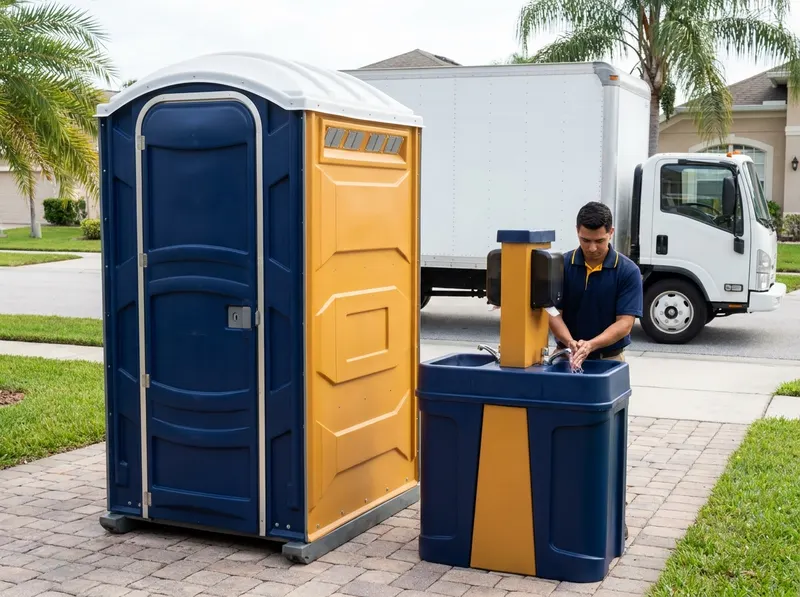
A portable hand wash station is the right call in three situations, and it is worth knowing which one you are in. First, food service: anywhere food is prepped, plated, or handled — a caterer's tent behind a Dr. Phillips backyard wedding, a food truck lineup at a Hourglass District lot, a market booth in Audubon Park — inspectors in Orange County generally expect soap, running water, and paper towels available to handlers, and a sanitizer pump on the wall of a restroom unit does not satisfy that. Second, crews doing dirty work: concrete, drywall mud, mastic, soil, and fiberglass do not come off with gel, so framing and sitework crews on the Lake Nona and Parramore builds usually want at least one sink near the break area. Third, guest comfort at higher-end events, where a row of standard units with no sink reads cheap no matter how clean the units are.
The alternative to a standalone sink is the interior sink in a flushable restroom trailer. That trade-off is real: a trailer gives you a plumbed sink, lighting, and climate control in one package, but it costs several times more, wants a reasonably level pad, and needs a truck that can physically reach the spot. On the brick side streets around Thornton Park and the narrow driveways off Edgewater Drive in College Park, a pair of freestanding sinks placed curbside is usually the cleaner answer than trying to spot a trailer. For a 150-guest, six-hour reception with a caterer on site, a common setup is standard units for guests plus one two-station sink at the restroom bank and a second sink dedicated to the catering tent — guests and food handlers should not be sharing one basin.
Florida conditions change how a sink is staged, and that is a delivery-day conversation nobody should have on delivery day. A gravity tank sitting in full afternoon sun near Lake Eola Park or on an open pad in Rosemont will push warm water by 3 p.m., so we place sinks in shade or on the north side of a trailer or tent when the layout allows. Grey-water tanks fill faster in heat and at high headcount, which is why sites with 25-plus workers often move to twice-weekly service instead of weekly. Soft, low-lying yards — plenty of them on the lakefront lots in Conway — need firm, level footing so a filled tank does not lean, and we will bring a board or shift the spot a few feet rather than set a sink on turf that is going to sink. In Baldwin Park, HOA sidewalk and setback rules usually dictate where a sink can legally sit, so tell us the association's restrictions when you book and we will spot to them.
What you should get from any supplier: a written unit count with a reason behind it, a service schedule in writing, and a straight answer on whether the truck can reach the placement point. Right count. On time. Spotless. Call (689) 353-8891 with your date and address and we will tell you how many sinks the job actually needs — including when the honest answer is one, not three.
Every job gets a firm, written price after a free on-site visit.
Tell us about your portable hand wash station rental job in Orlando and we'll send a clear, written quote — usually the same day.
 SupremePortable Porta Potty Hub