Unit count is the decision most Orlando supers are actually stuck on. **OSHA's construction sanitation rule (29 CFR 1926.51) sets one toilet facility for crews of 20 or fewer**, then scales up from there — but the…
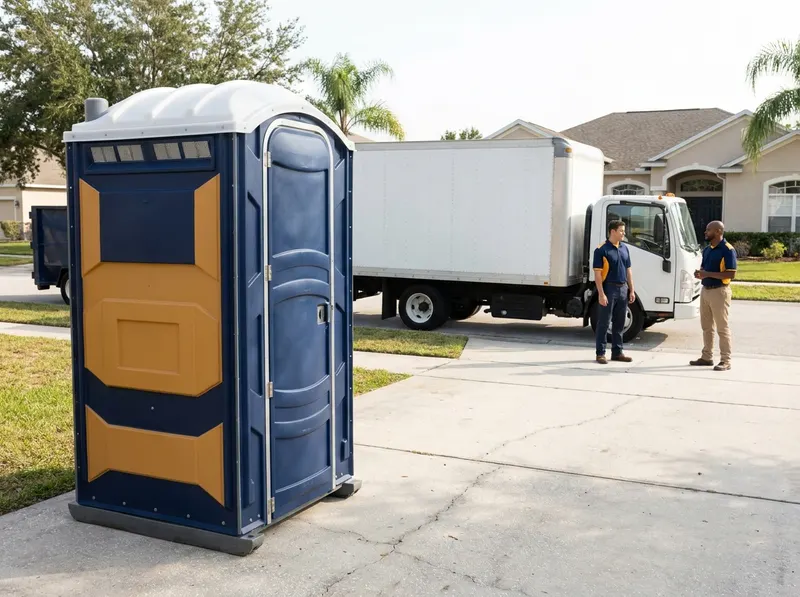
Unit count is the decision most Orlando supers are actually stuck on. OSHA's construction sanitation rule (29 CFR 1926.51) sets one toilet facility for crews of 20 or fewer, then scales up from there — but the practical field standard is one unit per 10 workers on a 40-hour week with weekly service. A 12-man framing crew on a Conway teardown is comfortable with one unit serviced weekly. A 30-man concrete and MEP overlap in Lake Nona should plan on three, and a hand-wash station if the crew eats lunch on site. Undercounting is what causes a unit to reach capacity by Thursday and a super to spend Friday morning calling for an emergency pump-out.
Construction-grade is not the same product as an event unit, and choosing by price alone is how sites end up with the wrong one. Standard construction units are gray HDPE with a large holding tank and no flush, which is exactly what survives dust, rebar, wet boots, and daily traffic. Flushable and trailer-style event units cost considerably more per month and are built for guests in dress shoes, not for a slab pour. The practical split: run construction-grade for the duration of the build, and add an event-grade unit only for something like an owner walkthrough, a topping-out lunch, or a model-home open house.
Placement decides whether service actually happens on schedule, so it gets settled before delivery rather than on delivery day. A pump truck needs drivable access within roughly 25 feet of the unit and overhead clearance for the vacuum boom. That plays out differently across town: College Park's narrow brick streets and rear alleys off Edgewater Drive limit truck angles, Baldwin Park alley placements have to stay clear of resident parking, and tight Parramore infill lots near Camping World Stadium leave almost no lay-down room — the unit stays on private property, not the Orange County sidewalk or right-of-way. Gated work in Dr. Phillips and Lake Nona needs a gate code or a name at the guard shack, or the route driver loses the stop. Rosemont, Audubon Park, and Hourglass District rebuilds are usually straightforward driveway placements.
Florida conditions get planned for, not discovered. Sandy fill and afternoon thunderstorm season mean units should be staked or strapped on open pads. Heat drives odor, so units go in shade where shade exists, downwind of the trailer and the break area, and on a firm level spot rather than soft fill. Service days are fixed weekly routes, which is what keeps a jobsite unit predictable; Saturday or Sunday needs are handled as special requests and confirmed at booking instead of promised in a phone quote. Relocations as the site changes, unit swaps on long builds, extra pump-outs between routes, and pickup on notice are all handled on the same account. Right count, on time, spotless — and written scope so nobody argues about what was ordered.
Every job gets a firm, written price after a free on-site visit.
Tell us about your construction site portable toilet (monthly rental) job in Orlando and we'll send a clear, written quote — usually the same day.
 SupremePortable Porta Potty Hub